Pet medical equipment
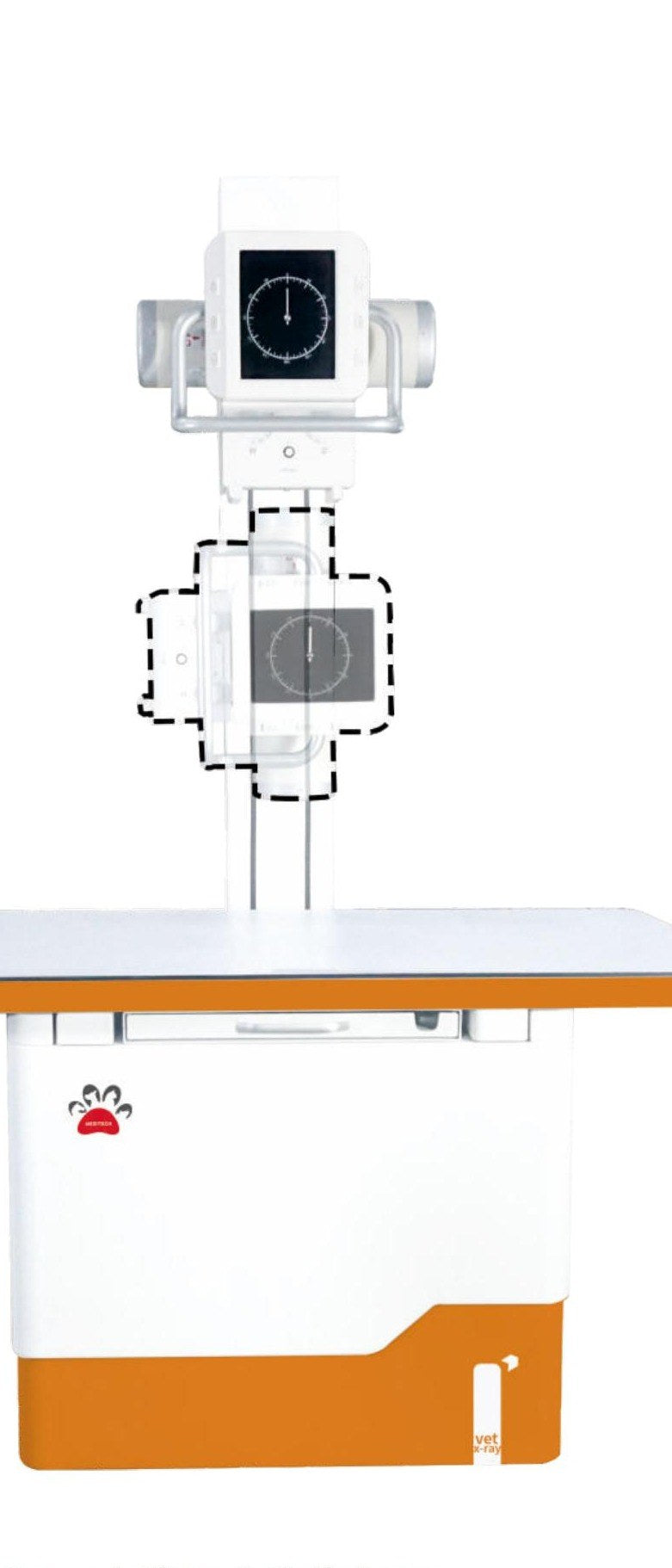
DRT-META32 Vet Fluoroscopy DR
DRT-META32 Vet Fluoroscopy DR
Request a Quote
Tell us the quantity and destination — we reply with a proforma invoice and payment details. We accept USD bank transfer (T/T), ACH and wire.
Chat on WhatsApp — instant replyThe DRT-META32 is a veterinary fluoroscopy DR system that produces fluoroscopy, dynamic video and static images from one machine. If you've been sending swallow studies and contrast transit cases elsewhere, this veterinary dynamic DR unit is what brings them back in-house.
PetMedTools supplies it quote-first. Send us your destination country and expected quantity and we'll issue a formal quotation with a proforma invoice.
Static images tell you shape. Dynamic tells you function.
A radiograph is a moment. That's fine for a fracture, useless for a megaoesophagus workup where the question is whether a bolus moves at all.
Fluoroscopy answers questions statics can't touch: swallow mechanics, contrast transit through the GI tract, tracheal collapse under respiratory effort, joint behaviour through range of motion, catheter and guidewire placement in real time. These are the cases that either get referred or get guessed at when your imaging is stills-only.
The exposure envelope
Input power is 32kW. The kV range runs 40-150kV and the mA range 0.5-400mA depending on mode. Exposure time spans 0.001-20s for images, with up to 5 minutes for fluoroscopy mode.
That mA span is the interesting part. Fluoroscopy needs very low continuous output; radiography needs high instantaneous output. A machine covering 0.5mA to 400mA is doing both jobs rather than compromising on one. The 5-minute fluoroscopy ceiling is your practical study limit — long enough for a full GI transit series with room to spare.
mAs range is 0.1~320mAs.
The tube moves so the patient doesn't have to
The tube supports moving up and down and rotating 90 degrees. That's what makes it possible to shoot animals of different sizes and from different positions without rebuilding your setup for each one.
Think about what this replaces. Without vertical travel and rotation, awkward positioning falls on the patient — a sedated animal gets lifted, propped and turned. With it, the machine adapts. Fewer staff hands, less patient disturbance, and a shorter anaesthetic event.
The bedside table and exotics
The bedside table features an external stand suitable for photographing exotic animals like turtles. That sounds like a niche detail until you run an exotics caseload and discover most imaging tables assume a dog-shaped patient.
The table itself is an electromagnetic locking four-way floating bed. Four-way float for positioning, electromagnetic lock so it stays exactly where you put it. Anyone who has had a table drift mid-exposure understands why the locking mechanism gets its own line on the spec sheet.
Specifications
- Input power: 32kW
- mAs range: 0.1~320mAs
- mA range: 0.5-400mA (for different modes)
- kV range: 40-150kV
- Exposure time: 0.001-20s for image, max 5min for fluoroscopy mode
- Tube movement: vertical travel plus 90 degree rotation
- Table: electromagnetic locking four-way floating bed
- External stand for exotic species positioning
- Output: fluoroscopy, dynamic video and static images
Who this machine is wrong for
We'd rather say this before you buy than after.
If your fluoroscopy caseload is a handful of studies a year, the maths doesn't work. Fluoroscopy capability costs more than static DR to buy, more to shield, and more to operate safely — and an occasional-use machine still needs the same protection equipment and the same trained operators as a busy one.
The practices this suits are the ones already referring out a steady stream of swallow studies, tracheal collapse assessments and contrast series, or running enough interventional work to want live guidance. If you can't name the cases you'd put through it in the next quarter, buy the static DR and revisit later.
Fluoroscopy time is a discipline, not a setting
The 5-minute ceiling per fluoroscopy run is a machine limit. Your own limit should be lower.
Continuous fluoroscopy delivers dose to the patient and scatter to everyone in the room, and the total depends almost entirely on operator habit. Pulse rather than run continuously, collimate tightly, and keep a screen-time log per study. Practices that track fluoroscopy minutes from day one develop good habits; practices that add tracking after an incident spend a year unlearning bad ones.
Choosing between static DR, fluoroscopy and CT
Three tiers, three price points, three different answers to "what do I actually need?"
Static DR — the DRT-40Vet covers stills only, with a Canon rotating anode tube, 32kW generator supporting 5-second exposure, a 17"*17" flat panel at 139um pixel pitch, and a four-way floating table. If your caseload is fractures, chests and survey films, this is the correct purchase and the cheaper one.
Fluoroscopy DR — this unit. You get everything static DR does plus motion. The premium buys you the case types you currently refer out.
CBCT — the Vetist 3 adds cross-sectional imaging: CT, dynamic DR, static DR and dental panoramic in one gantry, 4.5 seconds per scan, up to 600 slices at 0.14mm. Different question, different budget, and it needs a room of its own.
Our veterinary diagnostic equipment buying guide works through where those lines fall for different practice profiles, and the diagnosis and imaging range lists the rest.
Building the workflow around it
Fluoroscopy studies take longer than radiographs and usually need sedation held steady across several minutes — the veterinary anesthesia machine buying guide and the veterinary patient monitor buying guide cover matching those to longer procedures. For oxygen supply see the veterinary oxygen equipment buying guide.
Contrast studies frequently pair with endoscopy for the same presenting complaint, and the veterinary endoscope buying guide covers scope selection by species. The full index sits at the buying guides hub.
What to confirm before you order
The DRT-META32 is manufactured by TooToo MediTech Co., Ltd. Everything above comes from the manufacturer's published specification. Four things it can't tell you:
Shielding and fluoroscopy regulations. Continuous fluoroscopy carries stricter room and operator requirements than radiography in most jurisdictions. Confirm what applies to you before ordering.
Operator protection. Lead aprons, thyroid shields and dosimetry are not optional with a fluoroscopy unit. Budget for them alongside the machine.
Power supply and market registration. Confirm your electrical supply against the installation specification, and tell us your destination country so we can check documentation.
Service and warranty. Get warranty length, service arrangements and tube coverage in writing with the quotation. On any X-ray system the tube is the major lifetime cost.
Buying a DRT-META32
We work quote-first, so there's no price on this page. Send the models you're comparing, expected quantity, destination country and any certification, accessory or packaging requirements. We issue a proforma invoice against that, payment is by USD bank transfer — T/T, ACH or wire — and we ship once it clears.
Bulk pricing, distributor terms, OEM questions and region limits are settled at quotation. Comparing across categories? Start from the full product range.
Two things to send with the enquiry make the quotation useful rather than generic. First, your room dimensions and current shielding, because fluoroscopy requirements are stricter than radiography and it's better to find that out now. Second, a short list of the case types you expect to run — swallow studies, contrast transit, tracheal assessment, interventional guidance, or something else entirely.
With those two details we can tell you honestly whether this machine earns its price in your practice, or whether the static DR system does the same job for less. We have no interest in selling you fluoroscopy capability that sits idle.