Pet medical equipment
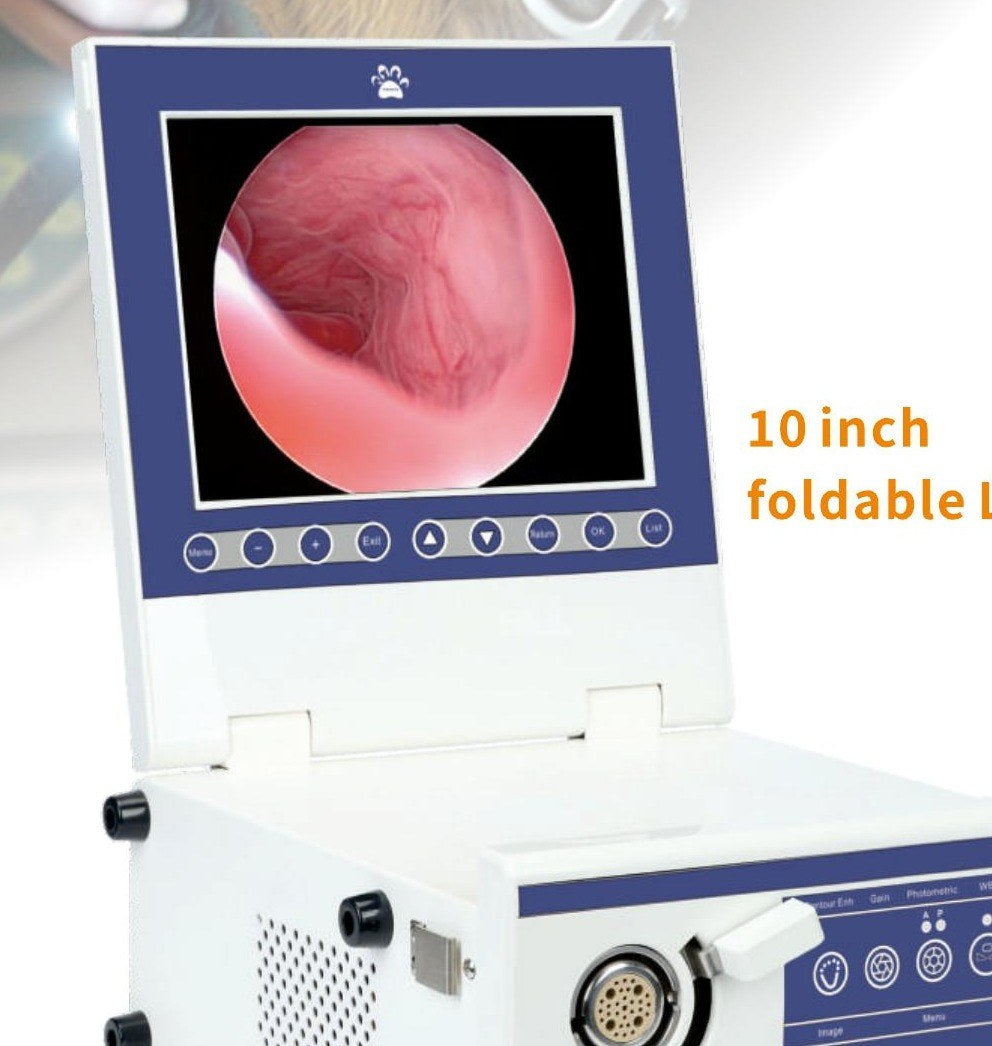
VET-600 VET Flexible Endoscope Image Processor CCD Technology
VET-600 VET Flexible Endoscope Image Processor CCD Technology
Request a Quote
Tell us the quantity and destination — we reply with a proforma invoice and payment details. We accept USD bank transfer (T/T), ACH and wire.
Chat on WhatsApp — instant replyThe VET-600 is a veterinary flexible endoscope image processor built on CCD technology, with a 10 inch foldable LCD display. It drives the GT-140, GT-150 and GT-330 scopes, which between them cover gastrointestinal examination from cats through to horses.
PetMedTools supplies this veterinary endoscope system quote-first. Tell us your destination country and expected quantity and we'll issue a formal quotation with a proforma invoice.
The processor and the scope are separate purchases
This distinction trips up more first-time endoscopy buyers than any other.
The VET-600 is the image processor — the box that powers the light source, captures the signal and puts a picture on screen. The scope is the flexible tube that goes into the patient. One processor drives multiple scopes, which means your upgrade path runs through scopes rather than through replacing the whole system.
Budget accordingly. A practice buying "an endoscope" usually needs a processor plus at least one scope, and often two scopes if the species range is wide.
Choosing between GT-140, GT-150 and GT-330
All three run 470,000 pixels, a 140° field of view and 3-100mm depth of field. What separates them is diameter, channel size, curvature and working length — and those four numbers decide which patients each scope can actually examine.
GT-150 is the small one: 8mm insertion tube diameter, 2mm channel, 1500mm working length, curvature UP 210° DOWN 90° LEFT&RIGHT 100°. It's for gastrointestinal examination in dogs and cats, and the 8mm diameter is what gets you into smaller patients.
GT-140 is the general-purpose scope: 9mm diameter, 2.8mm channel, same 1500mm working length and same curvature range. The extra 0.8mm of channel matters more than it sounds — channel diameter determines which biopsy forceps and retrieval baskets you can pass.
GT-330 is the large animal scope: 12.8mm diameter, 3.7mm channel, 3300mm working length, curvature UP 180° DOWN 160°. That working length is more than double the others because it's built for gastrointestinal examination in wild animals and horses. An equine gastroscopy needs to reach the stomach of an animal that is simply longer than a dog.
All three carry a suction channel, water and air channels, and picture and video capture.
Channel diameter is the spec that limits you
Field of view and pixel count get the marketing attention. Channel diameter determines what you can do once you're in there.
At 2mm you can pass fine biopsy forceps. At 2.8mm you have a broader instrument range and better suction with an instrument in place. At 3.7mm you can retrieve foreign bodies that would be impossible through a narrower channel — and foreign body retrieval is, in practice, one of the highest-value things an endoscope does in small animal work.
If your caseload includes a lot of dietary indiscretion, weight channel diameter heavily in your scope choice.
Specifications
- Display: 10 inch foldable LCD
- Technology: CCD image processor
- GT-140: 470,000 pixel, FOV 140°, DOF 3-100mm, IT dia. 9mm, channel 2.8mm, curvature UP 210° DOWN 90° L&R 100°, WL 1500mm
- GT-150: 470,000 pixel, FOV 140°, DOF 3-100mm, IT dia. 8mm, channel 2mm, curvature UP 210° DOWN 90° L&R 100°, WL 1500mm
- GT-330: 470,000 pixel, FOV 140°, DOF 3-100mm, IT dia. 12.8mm, channel 3.7mm, curvature UP 180° DOWN 160°, WL 3300mm
- All scopes: suction channel, water/air channel, picture and video capture
- Application: GI examination for dogs and cats (GT-140, GT-150); wild animals and horses (GT-330)
Everything listed above is what the manufacturer publishes for this processor and these three scopes. Video output interfaces, recording resolution and storage format aren't part of that published specification, so we're not going to state them here. If your setup depends on a particular output or recording format, ask us at quotation and we'll get the answer in writing from the manufacturer rather than guessing on your behalf.
The foldable screen
A 10 inch foldable LCD sounds like a minor convenience. In an equine or farm context it's the difference between a workable system and one that stays in the practice.
Folding protects the screen in transit. A trolley-mounted monitor with a fixed display is a fragile thing to move across a yard, and the screen is the most expensive part to replace.
Cleaning and reprocessing is the real running cost
Nobody quotes for this and everybody pays for it.
Flexible endoscopes have channels that must be cleaned and disinfected between patients, and the process is neither quick nor optional. Channel brushes, enzymatic detergent, disinfectant, leak testing equipment and a place to hang scopes to dry — that's the reprocessing setup, and it needs a physical space and a trained person.
Scope damage from inadequate cleaning or careless handling is the single largest unplanned cost in veterinary endoscopy. A bent insertion tube or a punctured channel is a repair bill that rivals a significant fraction of the scope price. Plan the reprocessing workflow before the scope arrives, not after your first blocked channel.
Working length: the number that decides equine capability
1500mm versus 3300mm looks like a small-animal versus large-animal distinction on the spec sheet. In practice it's the difference between being able to offer a service and not.
Equine gastroscopy requires reaching the stomach of a standing horse, which means passing the full length of the nasal passage, pharynx and oesophagus with enough scope left to examine and manoeuvre. A 1500mm scope does not reach. There's no technique that compensates for insufficient length.
So the GT-330 isn't a premium option for practices that also see horses — it's the only option among these three. If your caseload is mixed, you need both a short scope and a long one, and that should be in the budget from the start rather than discovered after the first equine referral.
Building the endoscopy service
Our veterinary endoscope buying guide works through scope selection by species and procedure, and the endoscopes range lists what else is available.
Every endoscopy happens under general anaesthesia, and gastroscopy in particular needs a stable plane held across a longer procedure than most practices are used to. The veterinary anesthesia machine buying guide and veterinary patient monitor buying guide cover matching those to endoscopic caseloads, and the veterinary oxygen equipment buying guide handles supply planning.
Endoscopy and imaging answer overlapping questions, so the veterinary diagnostic equipment buying guide is worth reading alongside this. Disinfection supplies sit in the veterinary clinic hygiene products buying guide, and the index is at the buying guides hub.
What to confirm before you order
The VET-600 is manufactured by TooToo MediTech Co., Ltd. Everything above comes from the manufacturer's published specification unless flagged otherwise. Four things to settle at quotation:
Which scopes. The processor alone doesn't examine anything. Decide scope models and quantities now.
Instruments. Biopsy forceps, retrieval baskets and snares have to match your channel diameter. Order them with the scope.
Reprocessing equipment. Leak tester, channel brushes and a drying cabinet or hanging space. Ask us what's included.
Service and warranty. Get warranty length and repair arrangements in writing. Scope repair terms matter more than processor warranty — the scope is what gets damaged.
Buying a VET-600
We work quote-first, so there's no price on this page. Send the models you're comparing, expected quantity, destination country and any certification, accessory or packaging requirements. We issue a proforma invoice against that, payment is by USD bank transfer — T/T, ACH or wire — and we ship once it clears.
Tell us your species mix with the enquiry and we'll recommend the scope combination rather than quoting a default one. Comparing across categories? Start from the full product range.