Pet medical equipment
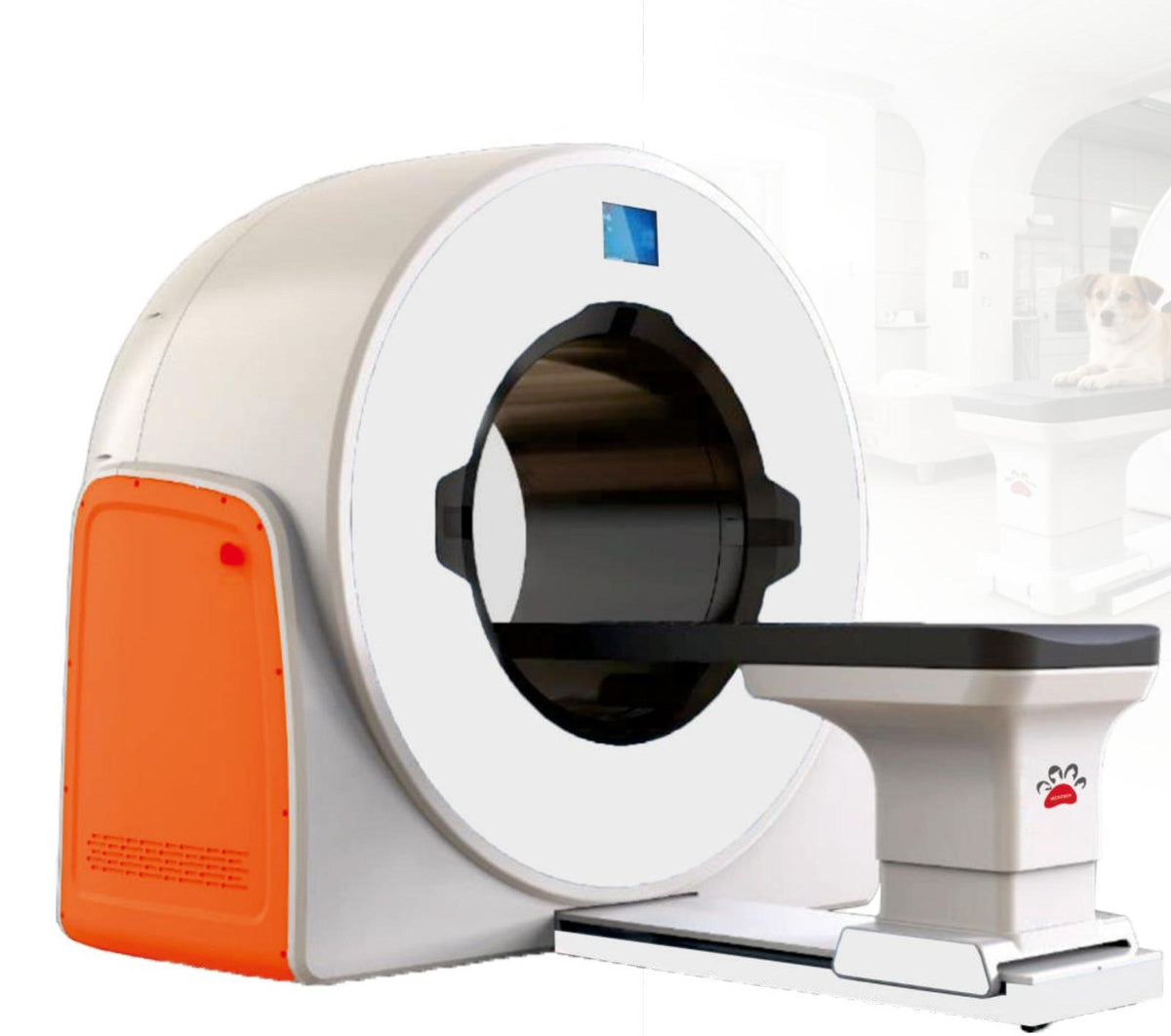
Vetist 3 Veterinary 4-in-1 CBCT
Vetist 3 Veterinary 4-in-1 CBCT
Request a Quote
Tell us the quantity and destination — we reply with a proforma invoice and payment details. We accept USD bank transfer (T/T), ACH and wire.
Chat on WhatsApp — instant replyThe Vetist 3 is a veterinary CBCT that also covers static DR, dynamic DR and dental panoramic imaging. One gantry, four modes. For a practice that's been quoting a veterinary CT scanner plus a separate DR table plus a dental X-ray system, that consolidation is the whole argument — and it's usually an argument about floor space as much as budget.
PetMedTools supplies this 4-in-1 CBCT on a quote-first basis. Tell us the destination country and how you plan to use it, and we come back with a formal quotation and a proforma invoice.
What the four modes actually cover
CT imaging, dynamic DR, static DR and dental panoramic all run off the same slip-ring gantry.
CT imaging is the mode you buy the machine for. A single scan completes in 4.5 seconds and produces up to 600 slices, with slice thickness down to 0.14mm. Thin slices matter for the cases that are easiest to miss — small lesions, early bone change, fine dental root detail. The 3D reconstruction runs on the same console, so you're not exporting to a second workstation to get a volume view.
Static DR handles the everyday radiographs: chest, abdomen, limbs, the survey films that make up most of a caseload. Having it inside the same system means a patient that arrives for radiographs and turns out to need cross-sectional imaging doesn't have to be moved, re-positioned and re-anaesthetised on a different table.
Dynamic DR gives you fluoroscopic-style motion capture — swallow studies, contrast transit, joint movement under load. Static images tell you what a structure looks like. Dynamic tells you what it does.
Dental panoramic is the mode most often underestimated at purchase and most used afterwards. A panoramic study replaces a lot of intraoral repositioning on a sedated patient.
The imaging cases the system is built around are lung, spine, dental with CPR, VR reconstruction, heart, and both static and dynamic DR views.
Bore, field of view and what actually fits
Maximum bore diameter is 80cm. The imaging area is listed at 35*26cm, and the catalogue separately describes a 40cm super-large field of view for single-scan coverage of big animals. Both figures are printed by the manufacturer, and we've left them as published rather than reconciling them for you — worth confirming against your own case mix at quotation.
What does a wider aperture buy you in practice? Fewer repositioning events. Anyone who has scanned a deep-chested dog knows the failure mode: the patient doesn't fit the plan, so you split the study, and the anaesthesia stretches from twenty minutes to forty. Aperture isn't a vanity spec — it's an anaesthetic-time spec.
Radiation dose and motion artefacts
Dose is quoted at 1/100 of a conventional CT scan. Respiratory suppression technology reduces motion artefacts, which is what produces cleaner reconstructions on thoracic and abdominal studies.
Motion is the usual reason a veterinary CT series gets repeated. A repeat isn't just wasted time — it's a second dose and a longer anaesthetic event for a patient who was already unwell enough to need the scan.
The case types it was built around
The manufacturer documents seven imaging applications for this system, and they map onto the referrals most small-animal practices already turn away.
Lung and heart studies are where thin slices earn their keep — a 0.14mm slice picks up nodules and early pulmonary pattern change that a survey radiograph flattens into nothing. Spine imaging is the classic CT referral: disc disease, vertebral anomalies, trauma staging in a patient you'd rather not move twice.
Dental imaging with CPR — curved planar reformation — unrolls a curved arcade into a flat view, which is how you see root pathology that a straight slice cuts across at an unhelpful angle. VR reconstruction renders the volume in three dimensions, and it is the single most useful thing to show a referring vet or an owner who needs to understand why surgery is being recommended.
The remaining two, static and dynamic DR, are the radiography modes described above, sharing the same table and the same console.
Room planning before you order
The unit measures W200*D170*H160cm and needs less than 6m² of floor space. That's a genuinely small footprint for cross-sectional imaging, but it's still a room decision, not a corner-of-the-lab decision. Work out shielding, door swing and cable routing before the crate arrives.
Slip ring rotation is carefree, and the system is specified for easy movement and installation. Send us your site layout with the quotation request — it's far cheaper to sort out now than after delivery.
Specifications
- Fast scan: 4.5 sec
- Slices per scan: 600
- Slice thickness: 0.14mm
- Imaging area: 35*26cm
- Large bore: max diameter 80cm
- Dimension: W200*D170*H160cm
- Space required: less than 6m²
- Radiation dose: 1/100 of conventional CT
- Slip ring: carefree rotation
- Modes: CT imaging, dynamic DR, static DR, dental panoramic
How it compares with our dedicated DR systems
Not every practice needs cross-sectional imaging. If your caseload is mainly radiography, a dedicated system will cost less and occupy less room.
The DRT-40Vet static DR runs a Canon rotating anode tube with a 32kW generator that supports exposure in 5 seconds, a 17"*17" flat panel detector at 139um pixel pitch, and a four-way floating table. Max tube voltage is 125kV. It's a radiography machine and nothing more, which is precisely why it's cheaper.
The DRT-META32 fluoroscopy DR sits between the two. Input power is 32kW, kV range 40-150kV, mA range 0.5-400mA depending on mode, and exposure time runs from 0.001-20s for stills up to five minutes of continuous fluoroscopy. The tube moves vertically and rotates 90 degrees, and the bedside table takes an external stand for exotics like turtles. If you want motion studies but not volumetric CT, that's the one to price.
Our veterinary diagnostic equipment buying guide walks through where those lines fall, and the diagnosis and imaging range lists what else is available.
Planning the workflow around it
A chairside sensor is still the right tool for single-root dental checks even with panoramic on board — the veterinary dental equipment buying guide covers that split, and the dental X-ray and sensor category lists chairside options.
CT changes your anaesthesia workflow. Shorter scans mean shorter events, but monitoring still has to keep pace: the veterinary patient monitor buying guide and the veterinary anesthesia machine buying guide are the two worth reading alongside this page. For oxygen delivery around imaging, see the veterinary oxygen equipment buying guide.
Soft tissue findings that start on CT often continue endoscopically, and the veterinary endoscope buying guide explains which scope diameters suit which species. The full index sits at the buying guides hub.
What to confirm before you order
The Vetist 3 is manufactured by TooToo MediTech Co., Ltd. Everything on this page comes from the manufacturer's published specification. There are four things that specification can't answer for you, and they're the four that cause problems after delivery.
Market certification. Registration requirements for veterinary imaging equipment differ by country. Tell us your destination at quotation stage so we can confirm what documentation ships with the unit.
Power supply. Confirm your available supply and phase against the installation requirement before the order is placed, not after the crate lands.
Service and warranty. Ask for warranty length and service arrangements in writing alongside the quotation. Get it on paper — for a machine at this price point, that conversation belongs before payment.
Installation and training. Who commissions it, who trains your team, and how long that takes. We'll set expectations honestly rather than after you've paid.
Buying a Vetist 3
We work quote-first, so there's no price on this page. Send us the models you're comparing, expected quantity, destination country, and any certification, accessory or packaging requirements. We issue a proforma invoice against that. Payment is by USD bank transfer — T/T, ACH or wire — and we ship once it clears.
Bulk pricing, distributor terms, OEM questions, region limits and shipping review all get settled at the quotation stage rather than left to guesswork. Still comparing categories? Start from the full product range and narrow down from there.