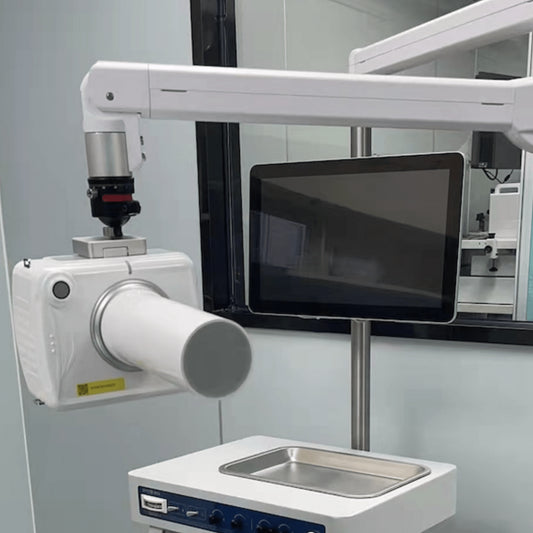
The PetMedTools dental line is built for US veterinary clinics setting up or expanding small-animal dentistry — complete dental units plus the instruments, consumables, and training models that keep an operatory running. It serves general practices adding prophy work, dental-heavy referral rooms, and teaching environments, with trade pricing on request.
How to choose a veterinary dental system
A dental operatory is a system, not a single purchase — settle the five axes below first. The PetMedTools buying guides cover each component in depth.
| Decision axis |
What to weigh |
Practical guidance |
| Compressor vs delivery unit |
Whether you have, or want, a compressor room |
Self-contained delivery units with integrated air and suction suit rooms without central supply; compressor-backed setups suit a dedicated suite. |
| High-speed vs low-speed handpieces |
Cutting work versus polishing work |
High-speed cuts and sections teeth for extractions; low-speed drives prophy angles. Most small-animal operators need both. |
| Scaler type |
Tip availability and the feel your team prefers |
Piezoelectric and magnetostrictive ultrasonic scalers both handle veterinary prophy — choose on tip selection and feel. |
| Suction |
Aerosol and fluid control at the field |
Built-in suction keeps aerosols down; where the unit lacks it, plan a standalone evacuator. |
| Table, cart, or wall-mount |
Room layout and whether the unit moves |
Table-top and cart units flex between rooms while volume builds; wall-mount keeps a dedicated operatory floor clear. |
Weigh maintenance too — daily water-line care, filter changes, and handpiece lubrication decide year-three performance.
Dental systems and supplies at a glance
The core unit is configured and quoted per clinic — full specifications on request. Supporting products carry the published details below.
| Product |
Role in the operatory |
Published specifications |
| Veterinary Dental Unit |
Central delivery system for scaling, polishing, and routine oral procedures |
On request |
| Canine Jaw with Pathologies Model |
Client-education and staff-training aid |
On request |
| The Dissection Model of Cat Kit Tooth |
Feline dental anatomy teaching model |
Life-size jaw; eight featured pathologies incl. fractured canine, periodontal disease, retained deciduous tooth; opens, closes, separates; education card and base included |
| Round Rod Sharpening Stone |
Edge maintenance for hand instruments |
Round-rod format made for tooth extraction knives |
| Dental Cleaning Water 250 mL |
Routine oral rinsing and procedure support |
250 mL bottle for dental-room replenishment |
Which dental setup fits your practice
General practice adding dentistry. One complete unit with an ultrasonic scaler plus high- and low-speed handpieces; a table-top or cart keeps things flexible while volume builds.
Dental-heavy or referral. A compressor-backed unit with suction at the field and a dedicated operatory layout. Dentistry runs under general anesthesia, so pair the room with monitoring — the monitor collection covers SpO2 and capnography on longer procedures.
Mobile and field. Cart-based delivery units with self-contained air and suction, so each stop runs independent of the building; keep consumables like dental cleaning water stocked per trip.
Teaching and training. Canine and feline jaw models with visible pathologies for client conversations and staff instruction, plus a sharpening routine — a round-rod stone keeps extraction knives keen between professional re-edging.
Dental system FAQs
What is included in a veterinary dental unit?
Treat the unit as the delivery core rather than a complete operatory. Confirm on the quote exactly what is included — scaler, high- and low-speed handpieces, water and air lines, suction, and compressor — then add instruments and consumables to match your treatment setup.
Do I need both high-speed and low-speed handpieces?
Yes, for most small-animal dentistry. The high-speed handpiece cuts and sections teeth during extractions; the low-speed drives prophy angles for polishing. Buying the unit with both fitted avoids a clinic that can scale and polish but cannot section a carnassial tooth safely.
Piezoelectric or magnetostrictive scaler — does it matter?
Both designs scale effectively in veterinary prophy, so the decision is practical rather than clinical. Piezoelectric units move the tip linearly; magnetostrictive units move it elliptically. Choose on tip availability, replacement tip cost, and which handpiece feel your team prefers over long sessions.
Why does a dental room need patient monitoring?
Because nearly all veterinary dentistry happens under general anesthesia, often for an hour or more. Monitor SpO2, capnography, blood pressure, and temperature through the full procedure and recovery, just as in surgery. Portable units from the monitor collection cover this without dedicated wiring.
What belongs in a dental training kit?
Start with jaw models that show real pathology: a canine jaw model for dog owners and the feline kit-tooth model, which displays eight pathologies from fractured canine to retained deciduous tooth and arrives with an education card. Models turn a treatment-plan talk into something owners can hold.
Send us your procedure mix, room layout, and whether you need a new build or an upgrade; PetMedTools will configure unit, handpieces, instruments, and consumables as one package — trade pricing on request. Request a quote to get started.