Pet medical equipment
iM-12V Multi-Parameter Veterinary Monitor
iM-12V Multi-Parameter Veterinary Monitor
Request a Quote
Tell us the quantity and destination — we reply with a proforma invoice and payment details. We accept USD bank transfer (T/T), ACH and wire.
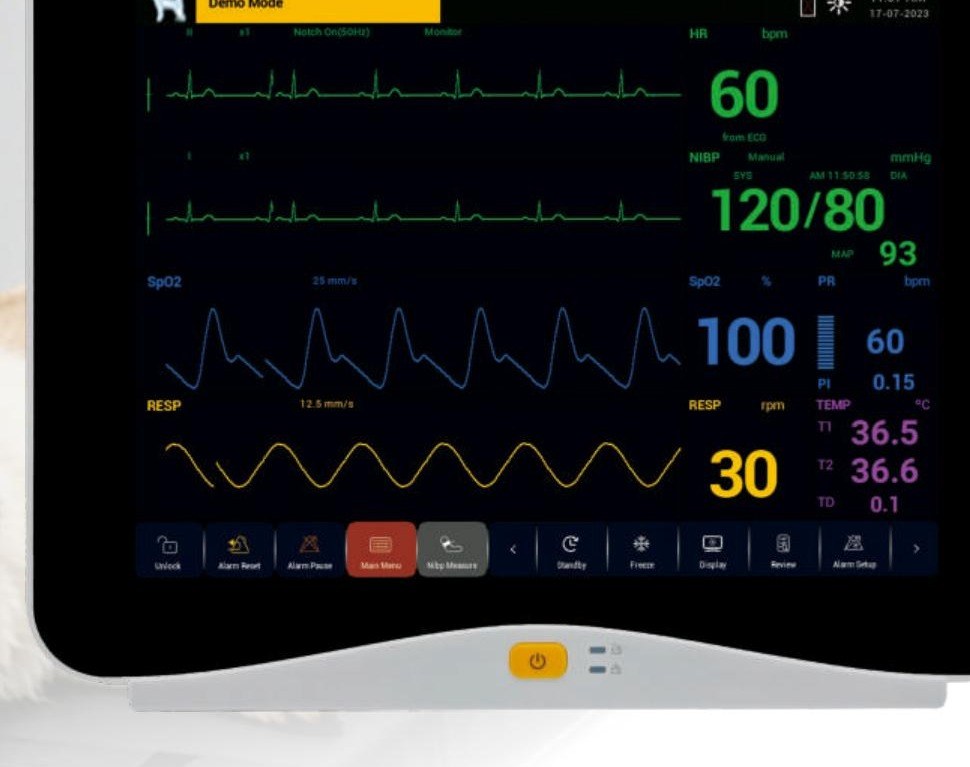
Chat on WhatsApp — instant replyThe iM-12V is a multi-parameter veterinary monitor built around animal-specific algorithms rather than human ones with the labels changed. It runs a 12.1 inch LED touch screen, weighs under 4kg with battery, and covers ECG, SpO2, NIBP, respiration and temperature as standard.
PetMedTools supplies this veterinary patient monitor quote-first. Tell us your destination country and expected quantity and we'll issue a formal quotation with a proforma invoice.
Why animal-specific algorithms matter more than the parameter list
Every monitor lists the same parameters. The difference between a good veterinary monitor and a repurposed human one shows up in how it behaves when the signal is poor — and in veterinary work the signal is poor a lot.
Fur interferes with electrode contact. Heart rates run from 40 to over 300 depending on species and stress. Limbs are the wrong shape for cuffs designed around human arms. Patients shiver, pant and move. A human algorithm meeting those conditions doesn't fail loudly; it produces a plausible number that happens to be wrong, or it alarms constantly until someone silences it. Both outcomes are worse than no monitor.
The four algorithms
ECG. The unit uses a patented ECG algorithm with ECG Smart Lead to keep monitoring stable. Lead detachment is the single most common cause of ECG alarm fatigue in a veterinary theatre — clips work loose on fur, patients get repositioned, and the trace drops out.
SpO2. Advanced technologies handle interference and weak perfusion. Weak perfusion is the normal state for an anaesthetised patient with peripheral vasoconstriction, so this isn't an edge case — it's most of your caseload.
NIBP. An animal-specific algorithm detects weak signal and interference, so measurement stays quick and accurate. Non-invasive blood pressure is the parameter that most often simply doesn't read on small patients, and a failed reading during a hypotensive episode is exactly when you need it most.
TEMP. Body temperature is collected in real time and plotted as a curve. A single temperature reading tells you where the patient is. A curve tells you where they're heading — and hypothermia under anaesthesia develops gradually enough that the trend matters more than the number.
Parameters, standard and optional
Standard coverage is ECG, HR, SpO2, NIBP, RESP and TEMP. IBP, CO2 and a printer are optional.
Which optional modules are worth specifying depends entirely on your caseload. Capnography earns its place fast in any practice ventilating patients — end-tidal CO2 confirms tube placement and shows ventilation adequacy in a way no other parameter does. Invasive blood pressure matters for critical care and long complex surgery. A printer matters if you keep paper anaesthetic records or need traces for referral correspondence.
Specify these at quotation. Adding modules later is rarely as simple as it sounds.
Screen size and weight
A 12.1 inch LED touch screen sounds like a luxury until you're across the room from the machine.
The whole point of a monitor during surgery is that a person whose hands are occupied can read it at a glance from wherever they're standing. Screen size and layout do more for practical safety than an extra decimal place of accuracy.
Under 4kg with battery means it moves. Theatre to recovery, or between rooms in a practice that can only justify one good monitor — the weight determines whether that actually happens or whether the machine stays bolted to one trolley.
The accessory cabinet
The unit has a dedicated accessory cabinet for effective accessory management. This is the least glamorous feature on the specification and the one your nurses will notice daily.
Cuffs in three sizes, SpO2 probes for tongue and paw, ECG clips, temperature probes, spare leads. In most practices these live in a drawer somewhere and half of them go missing. Storage attached to the machine means the accessories are where the machine is.
Specifications
- Touch screen: 12.1 inch LED
- Weight: less than 4kg with battery
- Standard parameters: ECG, HR, SpO2, NIBP, RESP, TEMP
- Optional parameters: IBP, CO2, printer
- ECG: patented algorithm with ECG Smart Lead
- SpO2: designed for interference and weak perfusion
- NIBP: animal-specific weak signal detection
- TEMP: real-time collection with temperature curve
- Accessory cabinet integrated
iM-12V or a handheld?
We also list the M3/M6 series mini veterinary monitors, and they answer a different question. Those run a 3.5/4 inch HD colour LCD, are compact and portable with built-in lithium battery and adjustable audible and visual alarms, and store trend data for 36 hours.
A handheld suits transport, field work, recovery kennels and practices needing a second monitor without a second trolley. It does not suit a surgical theatre where someone needs to read it at a glance from two metres away.
Most practices that buy both end up using them exactly that way: the large screen in theatre, the handheld everywhere else. Our veterinary patient monitor buying guide works through that split, and the veterinary doppler blood pressure monitor buying guide covers the case for a dedicated Doppler alongside NIBP.
Alarm limits are a setup job, not a default
Here's the failure mode we see most often, and it has nothing to do with the hardware.
A monitor arrives with default alarm limits. Those defaults are wrong for a cat and wrong for a Great Dane, so the machine alarms constantly. Within a fortnight someone turns the volume down, and the monitor becomes a screen nobody looks at rather than a safety system.
Set species-appropriate and size-appropriate limits during commissioning, write them into your anaesthetic protocol, and review them after the first month of real cases. This takes an afternoon and it determines whether the purchase does its job for the next five years.
Building the workflow around it
A monitor is only as useful as the anaesthesia setup it watches over. The veterinary anesthesia machine buying guide and veterinary anesthesia equipment buying guide cover matching ventilation to caseload, and the veterinary oxygen equipment buying guide handles supply.
If you're building diagnostic capability alongside theatre capability, the veterinary ecg machine buying guide explains why a diagnostic ECG isn't the same as a monitoring ECG. Consumables sit in the consultation consumables range, and the full index is at the buying guides hub.
What to confirm before you order
The iM-12V is manufactured by TooToo MediTech Co., Ltd. Everything above comes from the manufacturer's published specification. Four things to settle at quotation:
Optional modules. Decide on CO2, IBP and printer now. Retrofitting is harder than specifying.
Cuff and probe sizes. Confirm which sizes ship with the unit and order spares in the same shipment.
Market registration. Tell us your destination country so we can check documentation.
Service and warranty. Get warranty length and service arrangements in writing with the quotation.
Buying an iM-12V
We work quote-first, so there's no price on this page. Send the models you're comparing, expected quantity, destination country and any certification, accessory or packaging requirements. We issue a proforma invoice against that, payment is by USD bank transfer — T/T, ACH or wire — and we ship once it clears.
Bulk pricing, distributor terms, OEM questions and region limits are settled at quotation. Comparing across categories? Start from the full product range.
Tell us your species mix and typical patient weights with the enquiry. That determines which cuff and probe sizes you need, and it's the detail that most often gets missed until the machine is already in the building.