Pet medical equipment
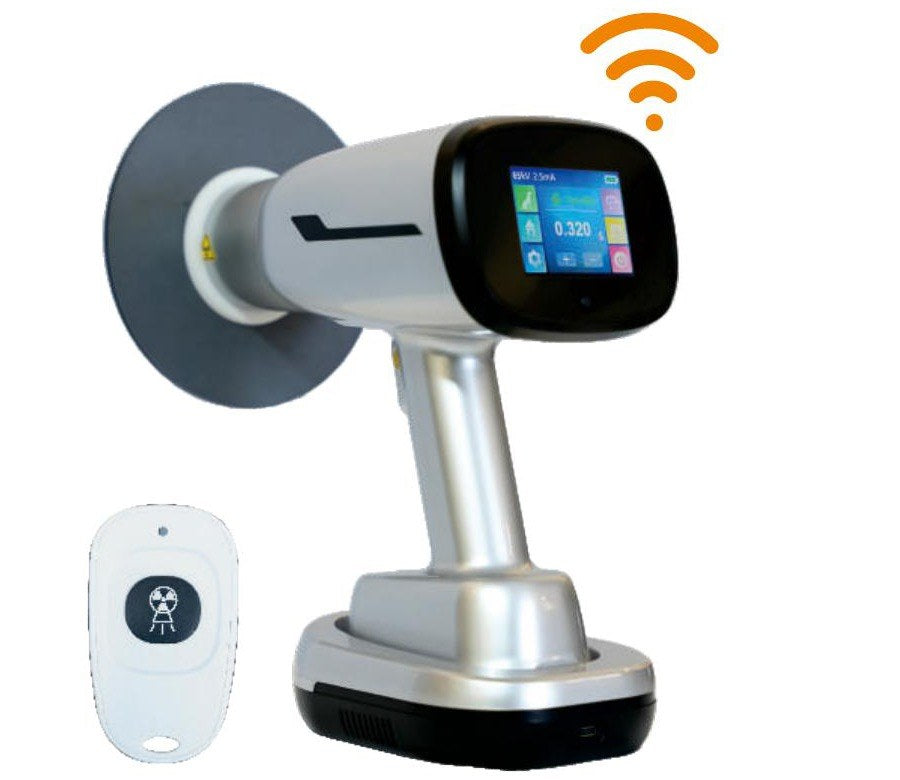
TT-52DX Veterinary Portable Dental X-ray Machine
TT-52DX Veterinary Portable Dental X-ray Machine
Request a Quote
Tell us the quantity and destination — we reply with a proforma invoice and payment details. We accept USD bank transfer (T/T), ACH and wire.
Chat on WhatsApp — instant replyThe TT-52DX is a portable veterinary dental X-ray machine with adjustable tube voltage and current — 60kV, 65kV or 70kV, at 2.5mA or 3.5mA. That adjustability is the whole reason to choose it over a fixed-output handheld, and it's the difference between one technique for every patient and a technique that suits the patient in front of you.
PetMedTools supplies this veterinary dental X-ray unit quote-first. Tell us your destination country and expected quantity and we'll issue a formal quotation with a proforma invoice.
Why adjustable output matters in dentistry
Veterinary dental radiography covers an absurd range of anatomy. A cat's mandibular incisor and a large dog's maxillary carnassial root are not the same imaging problem — different tissue depth, different bone density, different distance from film to source.
A fixed 65kV unit handles the middle of that range well and compromises at both ends. You end up with underexposed images on the big roots and overexposed ones on small incisors, and the correction happens in software rather than at capture. Software correction on a poorly exposed image doesn't recover detail that was never recorded.
Three kV steps and two mA steps give you six combinations. That's enough to build a genuine technique chart across species and tooth position.
The 0.4mm focal spot
Focal spot size sets your geometric sharpness ceiling. At 0.4mm you're in normal territory for dental imaging, and the practical limit on image quality will be your positioning and your sensor rather than the tube.
That's worth saying plainly. If your dental radiographs are disappointing, the fix is almost always parallel technique training and a better sensor holder, not a more expensive generator.
Radiation protection in the design
The unit is built with thick layers of lead plate in the cylinder and the outer shell, which is what produces the ultra-low radiation dose claim. Exposure is available by remote controller, so the operator can step away from the tube head at the moment of exposure.
Handheld dental units live or die on this point. The device is held near the patient's head, which means near the operator, repeatedly, across a working day. Shielding in the shell plus remote triggering are the two features that make daily use defensible. Local regulations may still require the operator to be behind a barrier or wearing protection — confirm what applies to you before you buy.
Specifications
- kV adjustable: 60kV / 65kV / 70kV
- mA adjustable: 2.5mA / 3.5mA
- Focal spot: 0.4mm
- Exposure: available by remote controller
- Shielding: thick layers of lead plate in cylinder and outer shell
- Type: ultra high frequency portable dental X-ray generator
TT-52DX, TT-22DX or TT-12DX?
Three portable dental units sit in this range and the differences are real rather than cosmetic.
TT-12DX is the fixed-output model, already available on our site. DC high frequency generator, tube voltage fixed at 65kV, tube current fixed at 2mA, 0.4mm focal dimension, 12.5° target angle. Exposure time is settable from 0.05 to 1.35 seconds in 0.01 second steps, total filter 1.5mm Al, X-ray field of view 50mm round-style. It weighs approximately 1.8kg and measures 144.5 x 222.5 x 195mm. You control exposure through time alone.
TT-22DX sits in between: 60.0/65.0/70.0kV and 2.5mA/3.5mA like the TT-52DX, exposure by remote controller, imported tube with thick lead plate covering the cylinder and outer shell. It's 1.8kg and can be handheld or mounted on a bracket.
TT-52DX is described as the ultra high frequency unit with the same adjustable ranges.
If your caseload is routine and your operators are consistent, the fixed TT-12DX is the cheaper correct answer. If you image a wide species range or want to build proper technique charts, adjustability earns its cost. Our veterinary dental equipment buying guide works through that decision.
The sensor is half the system
An X-ray generator produces photons. What turns them into a diagnostic image is the sensor and the software behind it, and buyers routinely spend carefully on the generator then economise on the sensor.
Sensor size determines what you can position in a small mouth. Resolution determines whether you can see the periodontal ligament space clearly enough to judge it. Durability determines how many you replace per year, because sensors get bitten. Our dental X-ray and sensor category lists the options, and the veterinary dental accessories buying guide covers holders and positioning aids.
Full mouth series: the number that shapes your day
A complete intraoral series is around ten views in a cat and closer to fourteen in a dog. Every one of those happens under anaesthesia.
Do the arithmetic on that before you buy. Ten to fourteen exposures per patient, at whatever your positioning and processing time is, on every dental case. If each view takes two minutes of positioning and capture, a full mouth series is adding half an hour of anaesthetic time per patient — and anaesthetic time is the real cost of dental radiography, not the film.
This is where an adjustable unit repays itself. Getting the exposure right first time removes retakes, and retakes are what turn a thirty minute series into forty-five. Build a technique chart during your first month, laminate it, and put it on the wall by the dental table.
Building the dental workflow
Dental radiography happens on an anaesthetised patient, every time. That makes your anaesthesia and monitoring setup part of the dental purchase whether you budgeted for it or not — the veterinary anesthesia machine buying guide and veterinary patient monitor buying guide cover matching those to dental caseloads, which tend to be long and low-stimulation.
If you're building dental capability from scratch rather than adding imaging to an existing setup, a workstation combines scaling, polishing, suction and imaging in one unit. The dental ultrasonic scaler range and dental instruments and sets cover the rest. Sterilisation options are in the dental sterilisation range, consumables in dental consumables, and the index at the buying guides hub.
What to confirm before you order
The TT-52DX is manufactured by TooToo MediTech Co., Ltd. Everything above comes from the manufacturer's published specification. Four things to settle at quotation:
Handheld regulations. Some jurisdictions restrict handheld dental X-ray use or require specific operator training and monitoring. Check before ordering, not after.
Sensor compatibility. Confirm which sensors the unit is being quoted with, and whether your existing sensor works if you have one.
Exposure time control. The published TT-52DX listing states kV and mA but not exposure time range. Ask us to confirm it in writing if your technique depends on fine time steps.
Service and warranty. Get warranty length and service arrangements on paper alongside the quotation.
Buying a TT-52DX
We work quote-first, so there's no price on this page. Send the models you're comparing, expected quantity, destination country and any certification, accessory or packaging requirements. We issue a proforma invoice against that, payment is by USD bank transfer — T/T, ACH or wire — and we ship once it clears.
Bulk pricing, distributor terms, OEM questions and region limits are settled at quotation. Tell us whether you need a sensor in the same order — pricing the two together is usually better than pricing them apart. Comparing across categories? Start from the full product range.