The PetMedTools anesthesia line is a complete inhalation-anesthesia setup for US veterinary clinics — machines, induction chambers, and safety accessories — built for general practices, surgery suites, and mobile teams anesthetizing dogs, cats, and exotics. Every configuration is quoted around your caseload, with trade pricing on request.
How to choose a veterinary anesthesia machine
Start here — vaporizer, circuits, and scavenging all follow from these five axes. The anesthesia machines for vets guide goes deeper.
| Decision axis |
What to weigh |
Practical guidance |
| Vaporizer agent dedication |
Vaporizers are agent-specific |
Pick your agent first. Isoflurane keeps per-case cost down; sevoflurane gives faster recoveries. |
| Breathing circuit and patient size |
Resistance and dead space in small patients |
Under roughly 7 kg (15 lb), favor non-rebreathing circuits; larger patients run on circle systems. |
| Flowmeter range |
Low-end control for your smallest patient |
Fine low-flow control, plus top end for large cases. |
| Scavenging route |
What your building supports |
No evacuation line: passive tank or disposable canister. Plumbed suction: active interface. |
| Ventilator upgrade path |
Whether the machine accepts a ventilator later |
If longer cases are ahead, spec ventilator-ready now rather than retrofitting later. |
Also weigh service response — vaporizer calibration and parts turnaround.
Anesthesia machines and accessories at a glance
TA20V and Veter 1000 are white-label configurations quoted per clinic — full specifications available on request; accessories carry the published specifications below.
| Product |
Role in the setup |
Published specifications |
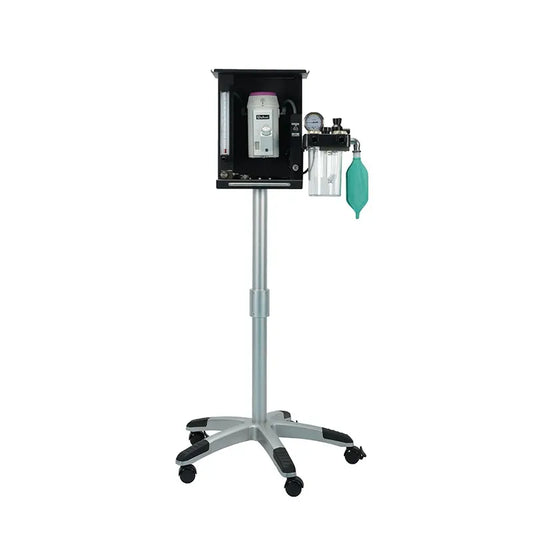
| TA20V Anesthesia Machine |
Primary inhalation anesthesia workstation |
Full specifications available on request |
| Veter 1000 Ultra-Compact Anesthesia |
Compact system for tight treatment rooms |
Full specifications available on request |
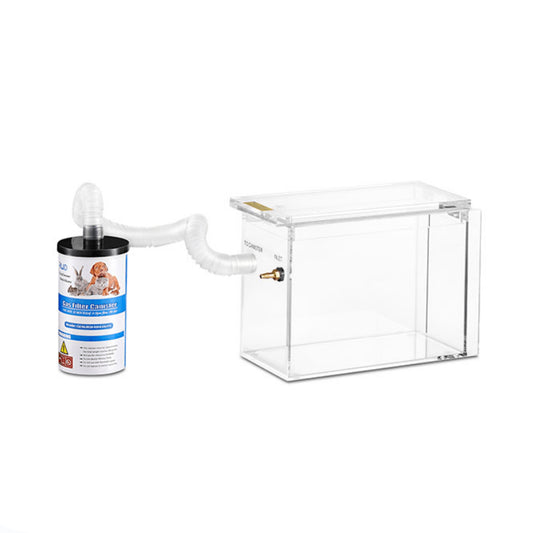
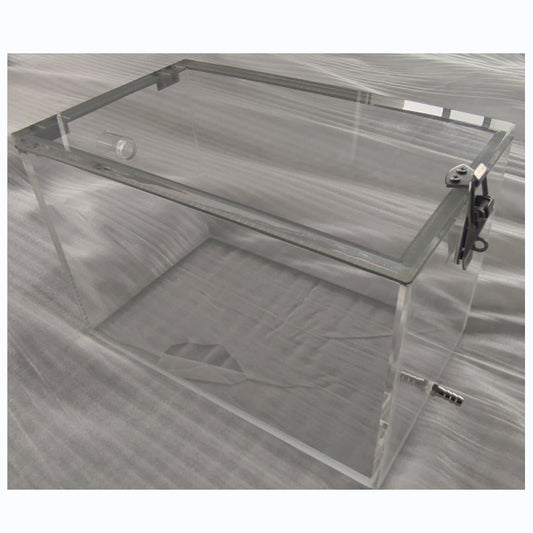
| Anesthesia Induction Chambers |
Pre-procedure inhalation induction |
Acrylic; four internal sizes — Small 115 × 100 × 110 mm, Medium 210 × 100 × 110 mm, Large 250 × 150 × 160 mm, Rabbit 220 × 220 × 150 mm |
| Exhaust Gas Recovery Tank |
Passive waste-gas scavenging |
120 g effective absorption; 500 g unit weight; >90% filtration |
| Disposable Gas Filter Canister 200 g |
Single-use waste-gas filtration |
200 g fill; 6 in size; 7/8 in male connector; <0.1 psi pressure drop |
| EtCO2 Airway Adapters |
Capnography sampling at the airway |
Dead space ≤1 mL (pediatric) / ≤6 mL (adult); 66 g |
| PVC Infant Resuscitator |
Manual ventilation for neonates |
150 mL stroke / 340 mL bag; patients 0–10 kg; 40 cmH2O pressure-limiting valve |
| Emergency BVM |
Crash-cart manual resuscitation |
60 cmH2O pressure-relief valve; latex-free |
Which anesthesia setup fits your practice
Small-animal GP surgery. One primary machine with a dedicated vaporizer, circle and non-rebreathing circuits to cover a 3 kg cat and a 40 kg dog, and passive scavenging without an evacuation line.
Dental-heavy or referral. A ventilator-ready machine with active scavenging where plumbed, plus EtCO2 adapters in both sizes for capnography on longer cases.
Mobile and field. Compact machines in the Veter 1000 class, disposable canisters since there is no plumbed evacuation, and a PVC infant resuscitator in every kit.
Teaching and training. Induction chambers for demonstrating small-patient induction, a resuscitator and emergency BVM at every station, plus monitoring guidance from the portable vet monitor buying guide.
Anesthesia FAQs
Is one vaporizer interchangeable between isoflurane and sevoflurane?
No — vaporizers are agent-specific. Each unit is calibrated for a single agent, so filling it with the wrong agent delivers an inaccurate concentration. Decide on your agent first, have the machine configured with the matching vaporizer, and keep a calibration schedule.
When should a patient go on a non-rebreathing circuit?
As a working rule, patients under roughly 7 kg (15 lb) are managed on a non-rebreathing circuit such as a Bain or Mapleson system, where low resistance and minimal dead space matter more than gas economy. Larger patients typically run on a circle system.
Do I need active or passive scavenging for waste gas?
Match the route to your building. With no plumbed evacuation, passive options — the recovery tank at 120 g effective absorption and over 90% filtration, or a disposable 200 g canister — handle waste gas at the machine. The recovery tank article covers the details.
What safety accessories belong on every anesthesia cart?
Carry manual resuscitation across your patient range: a PVC infant resuscitator for patients up to 10 kg and an emergency bag-valve-mask with a 60 cmH2O relief valve for larger patients. Add EtCO2 adapters if you monitor capnography, plus a spare waste-gas canister.
Can I add a ventilator to my machine later?
That depends on the configuration, so raise it at quote stage rather than after the machine arrives. If your caseload includes long procedures or referral cases, ask for a ventilator-ready setup up front — specifying the path early is cheaper than retrofitting.
Tell us your species mix, caseload, and room layout; PetMedTools will configure machine, vaporizer, scavenging, and accessories to match — trade pricing on request. Request a quote to start.