Pet medical equipment
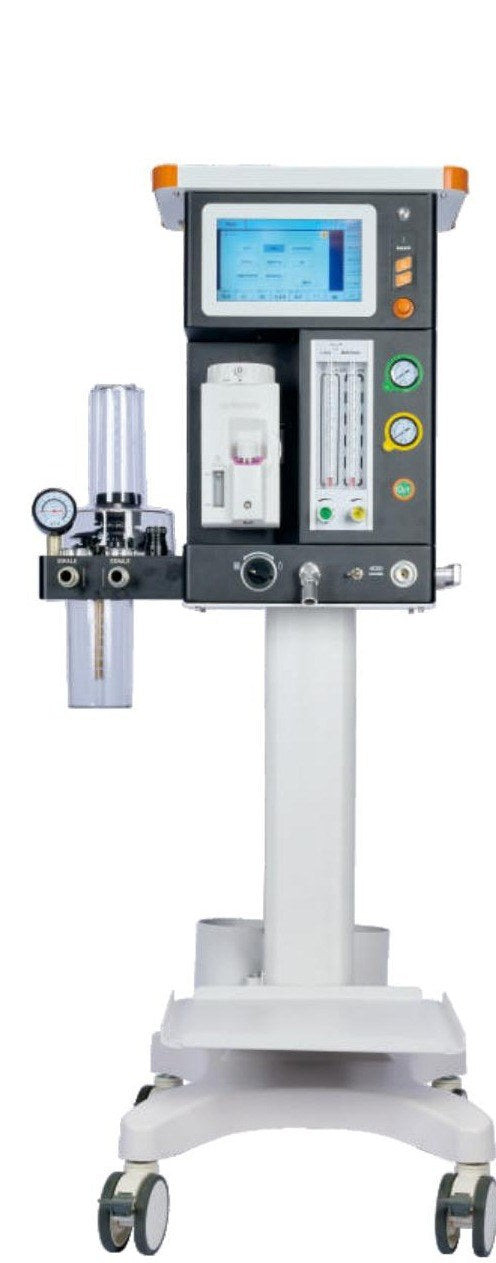
TA80V 2-in 1 Vet Ventilator + Anesthesia Machine
TA80V 2-in 1 Vet Ventilator + Anesthesia Machine
Request a Quote
Tell us the quantity and destination — we reply with a proforma invoice and payment details. We accept USD bank transfer (T/T), ACH and wire.
Chat on WhatsApp — instant replyThe TA80V is a 2-in-1 veterinary ventilator and anesthesia machine driven by an electrical control turbine. No air source is required to drive the ventilator, and the unit is built specifically for anaesthesia on small and companion animals rather than adapted from a human platform.
PetMedTools supplies this veterinary anesthesia ventilator quote-first. Tell us your destination country and expected quantity and we'll issue a formal quotation with a proforma invoice.
Turbine drive removes the compressor from your budget
Electrical control turbine drive means the machine generates its own driving pressure. There's no compressed air line to install, no compressor to buy, service and eventually replace, and no pipework to route through a building that probably wasn't designed for it.
For a practice fitting out a new theatre, that's a meaningful chunk of the install cost gone. For a practice retrofitting an old building, it's often the difference between the project being viable and not.
There's a second benefit that shows up on the monthly oxygen bill. Pneumatically driven ventilators consume drive gas on top of what the patient breathes. Take that away and a cylinder lasts longer.
Mixing O2 and air
The TA80V mixes oxygen and air for the patient. This is a safety feature, not a cost feature, though it happens to be both.
Ventilating a patient on 100% oxygen for an extended procedure carries real risks — absorption atelectasis and oxygen toxicity are the textbook ones, and both are avoidable by delivering a lower inspired fraction when the patient doesn't need pure O2. Being able to blend down is standard practice in human anaesthesia and still relatively uncommon on veterinary machines at this level.
Circuit heating
The circuit heating function warms the gas going to the animal and evaporates water inside the circuit to protect components.
Two problems, one solution. Anaesthetised patients lose heat fast, and cold dry gas straight into the airway makes it worse — hypothermia is one of the most common anaesthetic complications in small animals, and small patients cool fastest. Meanwhile condensation inside a circuit is what degrades sensors and valves over time. Heating the circuit addresses both.
Screen and controls
A 9 inch HD touch screen displays real-time parameters. The ACGO switch is independent and one-step, which matters more than it sounds — switching to the auxiliary common gas outlet mid-case should be a single deliberate action, not a sequence you have to remember under pressure.
CO2 absorber and dead space
The CO2 absorber canister holds 1000ml and is specified to reduce dead space.
Dead space is the volume of gas the patient rebreathes without it participating in gas exchange, and it's a proportionally bigger problem the smaller your patient is. On a 3kg cat, dead space that would be irrelevant on a large dog becomes a genuine ventilation problem. A canister designed with that in mind is a small-animal design decision, not a generic one.
Canister capacity also sets how often you change soda lime. 1000ml is a working day rather than a single procedure for most caseloads.
Vaporiser mounting and filling
The unit takes a Selectatec vaporiser and is described as easy to assemble. Selectatec is the common mounting standard, which means vaporisers are widely available and a spare or a second agent can be sourced without being locked to one supplier.
Three filling methods are supported: Easy-Fill, Pour-Fill and Key-Fill. Key-Fill is the agent-specific keyed system that prevents filling a vaporiser with the wrong agent. Pour-Fill is simpler and faster. Which you want depends on how many agents you run and how many people fill the vaporiser — a single-vet practice and a six-vet hospital should answer differently.
Specifications
- Design: 2-in-1 vet ventilator and anesthesia machine
- Drive: electrical control turbine, no air source required
- Touch screen: 9 inch HD, real-time parameter display
- Gas mixing: O2 and air
- Circuit heating: warms gas and evaporates internal moisture
- Vaporiser: Selectatec mount
- Vaporiser filling: Easy-Fill, Pour-Fill, Key-Fill
- ACGO switch: independent, one-step
- CO2 absorber canister: 1000ml capacity, reduced dead space
- Intended use: anaesthesia for small and companion animals
TA80V or TA-90V?
The TA-90V is the sibling unit, also turbine driven and also 2-in-1. It carries a 10 inch TFT touch screen against the TA80V's 9 inch HD, and its published listing adds specifics the TA80V's doesn't: tidal volume 5-1500ml, simultaneous display of multiple waveforms and 6 parameters, six ventilation modes (VCV, VS, PCV, VPS, SIMV and manual), two AC power outputs, three installation options and a minimum 2-hour battery.
The TA80V's published listing leads instead on gas mixing, circuit heating, the one-step ACGO switch and the 1000ml absorber.
Are these tiers or variants? The catalogue doesn't say, and we won't invent a hierarchy to justify a price difference. Bring your case mix to the quotation and we'll get the comparison confirmed by the manufacturer in writing.
Soda lime is the cost nobody budgets
A 1000ml canister needs filling, and soda lime is consumed by use rather than by time. Practices consistently underestimate this line.
Exhausted absorbent doesn't announce itself. The colour indicator changes, but it also reverts when the granules rest overnight, which is how a canister that looked fine at 8am stops absorbing by mid-morning. The reliable signal is inspired CO2 on a capnograph — which is a good argument for specifying gas monitoring rather than treating it as optional.
Work out your monthly consumption at quotation stage and order the first few months with the machine. Shipping absorbent separately later costs more than shipping it in the same crate.
Building the workflow around it
Monitoring has to match your ventilation capability — the veterinary patient monitor buying guide covers parameter selection for surgical work. Broader background sits in the veterinary anesthesia equipment buying guide and the veterinary anesthesia machine buying guide.
For fractious patients and exotics, see the veterinary induction chamber buying guide. Oxygen supply planning is in the veterinary oxygen equipment buying guide.
Circuits, bags and soda lime are recurring costs. The anaesthesia consumables range and anaesthesia masks list what fits, and the index is at the buying guides hub.
What to confirm before you order
The TA80V is manufactured by TooToo MediTech Co., Ltd. Everything above comes from the manufacturer's published specification. Four things to settle at quotation:
Vaporiser. Which agent, which fill type, and whether it's included. This is the most common gap between quotation and working theatre.
Tidal volume range. The published TA80V listing doesn't state it. If you ventilate very small patients, ask us to confirm the figure in writing before ordering.
Market registration. Tell us your destination country so we can check what documentation ships.
Service and warranty. Get warranty length and service arrangements on paper alongside the quotation.
Buying a TA80V
We work quote-first, so there's no price on this page. Send the models you're comparing, expected quantity, destination country and any certification, accessory or packaging requirements. We issue a proforma invoice against that, payment is by USD bank transfer — T/T, ACH or wire — and we ship once it clears.
Bulk pricing, distributor terms, OEM questions and region limits are settled at quotation. Comparing across categories? Start from the full product range.
Send your typical patient weight range, your preferred vaporiser agent and fill type, and whether you want gas monitoring. Those three answers turn a generic quotation into one you can actually act on.